
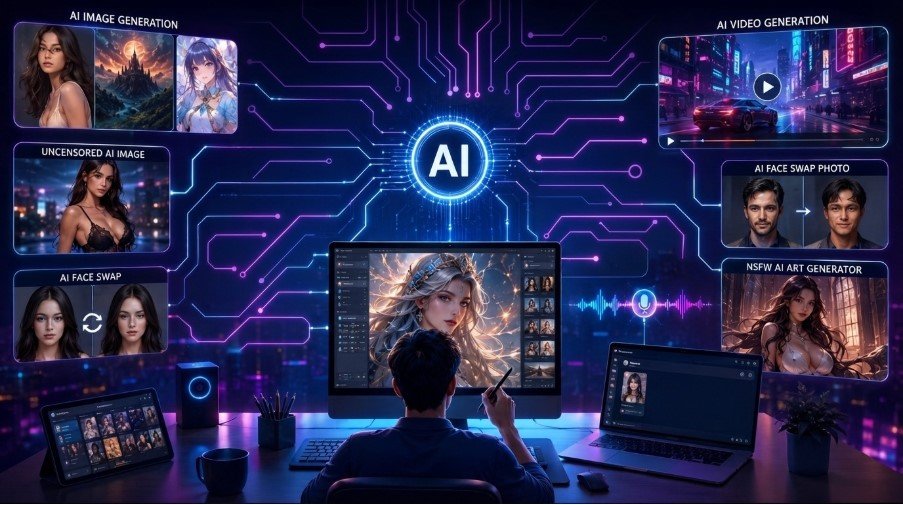
Artificial intelligence has rapidly evolved from a productivity enhancer into a powerful creative partner. Today, AI tools help individuals and businesses write content, design visuals, generate videos, analyze data, and collaborate on ideas faster than ever before. As these technologies continue to mature, they are giving creators more flexibility while reducing the technical barriers that once limited innovation.
The next generation of AI tools is not about replacing human creativity. Instead, it is about empowering creators with intelligent assistants that can transform ideas into polished content across multiple formats. From writing and digital art to video production and voice interaction, AI is reshaping creative workflows in exciting ways.
This article explores how modern AI tools are expanding creative freedom, the technologies driving this transformation, and what users can expect from the future of AI-powered content creation.
AI Is Entering a New Era
The first wave of AI focused primarily on automation. Early tools could complete repetitive tasks, generate simple text, or perform basic image recognition. Today’s AI systems are significantly more advanced.
Modern AI platforms can understand context, generate natural conversations, create detailed artwork, edit videos, produce realistic voices, and assist with complex problem-solving. Instead of performing a single task, they now support complete creative workflows.
This shift is changing how professionals, students, entrepreneurs, marketers, and artists approach content creation.
Creative Freedom Through AI
Creative freedom means having the ability to experiment without unnecessary technical limitations. AI tools make this possible by allowing users to quickly test ideas, refine concepts, and explore different creative directions.
Some of the biggest advantages include:
- Faster brainstorming sessions
- Instant content drafts
- Rapid visual prototyping
- Easier editing and refinement
- Lower production costs
- Greater accessibility for beginners
Rather than spending hours creating a first draft, creators can focus more time on improving quality and originality.
The Rise of Multimodal AI
Modern AI platforms continue to expand beyond text generation by combining multiple creative capabilities into a single experience. Many solutions now support AI image generation, conversational assistants, voice interactions, and advanced editing tools. Some platforms also offer AI face swap features for creative projects such as digital storytelling, marketing concepts, educational demonstrations, and entertainment, allowing users to experiment with visual content more efficiently.
Instead of working only with text, modern AI systems can understand and generate multiple forms of content, including:
- Written documents
- Images
- Videos
- Audio
- Voice conversations
- Interactive experiences
A user can describe an idea in plain language and receive supporting visuals, narration, and written content in a single workflow. This integrated approach dramatically improves efficiency and creativity.
AI Writing Has Become More Intelligent
Writing assistants have evolved beyond simple grammar correction.
Modern AI writing tools can help with:
- Blog articles
- Marketing copy
- Product descriptions
- Business reports
- Social media content
- Email communication
- Technical documentation
More importantly, they understand context and maintain consistency across long-form content, making collaboration between humans and AI much more natural.
Writers remain responsible for creativity, accuracy, and editing, while AI accelerates the drafting process.
Image Generation Continues to Improve
AI-generated images have become increasingly realistic and customizable.
Designers, marketers, educators, and entrepreneurs use image generation tools to create:
- Illustrations
- Concept art
- Product mockups
- Marketing graphics
- Brand assets
- Presentation visuals
The newest generation of image models offers better prompt understanding, improved detail, higher resolutions, and more consistent outputs.
As these systems evolve, they are becoming valuable creative companions rather than simple image generators.
Video Creation Is Becoming More Accessible
Video remains one of the fastest-growing forms of digital communication.
AI is making professional-quality video production more accessible by assisting with:
- Script generation
- Storyboarding
- Scene creation
- Video editing
- Voice narration
- Animation
- Subtitle generation
These capabilities reduce production time while allowing creators to focus on storytelling and audience engagement.
Future AI video tools are expected to provide even more realistic motion, better editing controls, and seamless collaboration.
Natural Voice AI Is Transforming Communication
Voice technology has advanced dramatically in recent years.
Modern AI voice systems can:
- Conduct conversations
- Read documents naturally
- Translate languages
- Narrate presentations
- Generate realistic speech
- Support accessibility
As speech recognition and voice synthesis continue improving, AI-powered communication will become increasingly natural and responsive.
Voice assistants are likely to become a standard component of both personal and professional productivity.
Personalized AI Assistants
Another significant trend is the development of personalized AI assistants.
Unlike traditional chatbots, modern assistants can adapt to user preferences and maintain conversational context.
They help users:
- Organize projects
- Brainstorm ideas
- Research topics
- Solve technical problems
- Draft content
- Learn new skills
Personalized AI creates a more collaborative experience by understanding how each individual prefers to work.
AI for Creative Collaboration
AI is increasingly becoming a collaborative partner rather than simply a software tool.
Creative professionals use AI to:
- Generate multiple design concepts
- Compare writing styles
- Explore alternative approaches
- Refine creative direction
- Accelerate production workflows
Instead of replacing human expertise, AI complements it by handling repetitive tasks while people focus on strategy, storytelling, and decision-making.
Privacy and User Control
As AI adoption grows, users are placing greater emphasis on privacy.
Modern AI platforms are introducing features such as:
- Flexible privacy controls
- Anonymous access options
- Secure conversation management
- User-controlled data retention
- Customizable interaction settings
These improvements help users feel more confident while exploring AI-powered creativity.
Organizations that prioritize transparency and user choice are likely to earn greater trust over time.
AI Face Editing and Visual Enhancement
Computer vision has significantly expanded the capabilities of AI-powered visual editing.
Current applications include:
- Portrait enhancement
- Background replacement
- Style transfer
- Object editing
- Facial expression adjustments
- Historical photo restoration
These technologies support creative projects across photography, filmmaking, advertising, education, and entertainment.
As the technology advances, responsible implementation and ethical safeguards remain essential.
AI Is Supporting Teams, Not Just Individuals
Businesses increasingly rely on AI to improve collaboration across departments.
AI helps teams:
- Generate meeting summaries
- Organize knowledge
- Draft presentations
- Analyze customer feedback
- Produce reports
- Create marketing campaigns
By reducing administrative work, employees can dedicate more time to innovation and strategic thinking.
The Importance of Responsible AI
While AI unlocks tremendous creative potential, responsible development remains critical.
Key priorities include:
- Protecting user privacy
- Improving transparency
- Reducing harmful bias
- Respecting intellectual property
- Encouraging responsible content creation
Technology companies, researchers, policymakers, and users all share responsibility for ensuring AI continues to benefit society.
Emerging Trends Shaping the Future
Several innovations are expected to define the next generation of AI tools.
Real-Time Collaboration
Future AI systems will collaborate with users while projects are being created rather than waiting for individual prompts.
Smarter Personalization
AI assistants will better understand long-term preferences, making interactions more efficient and personalized.
Better Multimodal Understanding
Future models will combine text, images, audio, and video with greater accuracy, enabling more seamless creative workflows.
Faster Content Generation
Advances in hardware and model optimization will reduce generation times while improving output quality.
Improved Accessibility
AI tools will continue making professional creative software accessible to individuals with different technical backgrounds and abilities.
The Role of Flexible AI Platforms
As user needs become more diverse, AI platforms are evolving to offer greater customization and flexibility.
Many modern solutions now combine:
- Conversational AI
- Image creation
- Video generation
- Voice interaction
- Workflow automation
- Creative collaboration
Platforms such as NoCensor.ai reflect this broader industry trend by bringing together multiple AI capabilities into a unified environment. The wider movement toward flexible, customizable AI experiences highlights the growing demand for tools that adapt to different creative goals while giving users more control over how they interact with artificial intelligence.
Frequently Asked Questions
What are next-generation AI tools?
Next-generation AI tools combine advanced language models, image generation, video creation, voice interaction, and multimodal capabilities to support creative and professional workflows.
How do AI tools improve creativity?
AI helps users generate ideas, automate repetitive tasks, create visual content, draft written material, and explore multiple creative directions more efficiently.
What is multimodal AI?
Multimodal AI refers to systems that can understand and generate different types of content—including text, images, audio, and video—within a single platform.
Can AI replace human creativity?
No. AI is most effective as a creative assistant that enhances productivity and supports idea generation, while humans remain responsible for originality, critical thinking, and final creative decisions.
Why is responsible AI important?
Responsible AI promotes transparency, protects user privacy, reduces bias, respects intellectual property, and encourages the ethical use of artificial intelligence across different industries.
What does the future hold for AI-powered creativity?
Future AI tools are expected to offer smarter personalization, real-time collaboration, improved multimodal capabilities, faster content generation, and broader accessibility, making creative work more efficient and innovative for everyone.
Conclusion
Artificial intelligence is transforming creativity by making advanced technologies more accessible, collaborative, and efficient. The next generation of AI tools is helping creators move beyond traditional limitations, enabling faster experimentation, richer multimedia experiences, and more personalized workflows.
Rather than replacing human imagination, AI enhances it by supporting every stage of the creative process—from brainstorming and writing to image generation, video production, and voice interaction. As AI continues to evolve responsibly, it will become an even more valuable partner for creators, businesses, educators, and innovators.
The future of creative freedom lies not in automation alone, but in the collaboration between human ingenuity and intelligent technology. Those who embrace these tools thoughtfully will be well-positioned to create more engaging, impactful, and innovative digital experiences.

